- blog
-
by admin
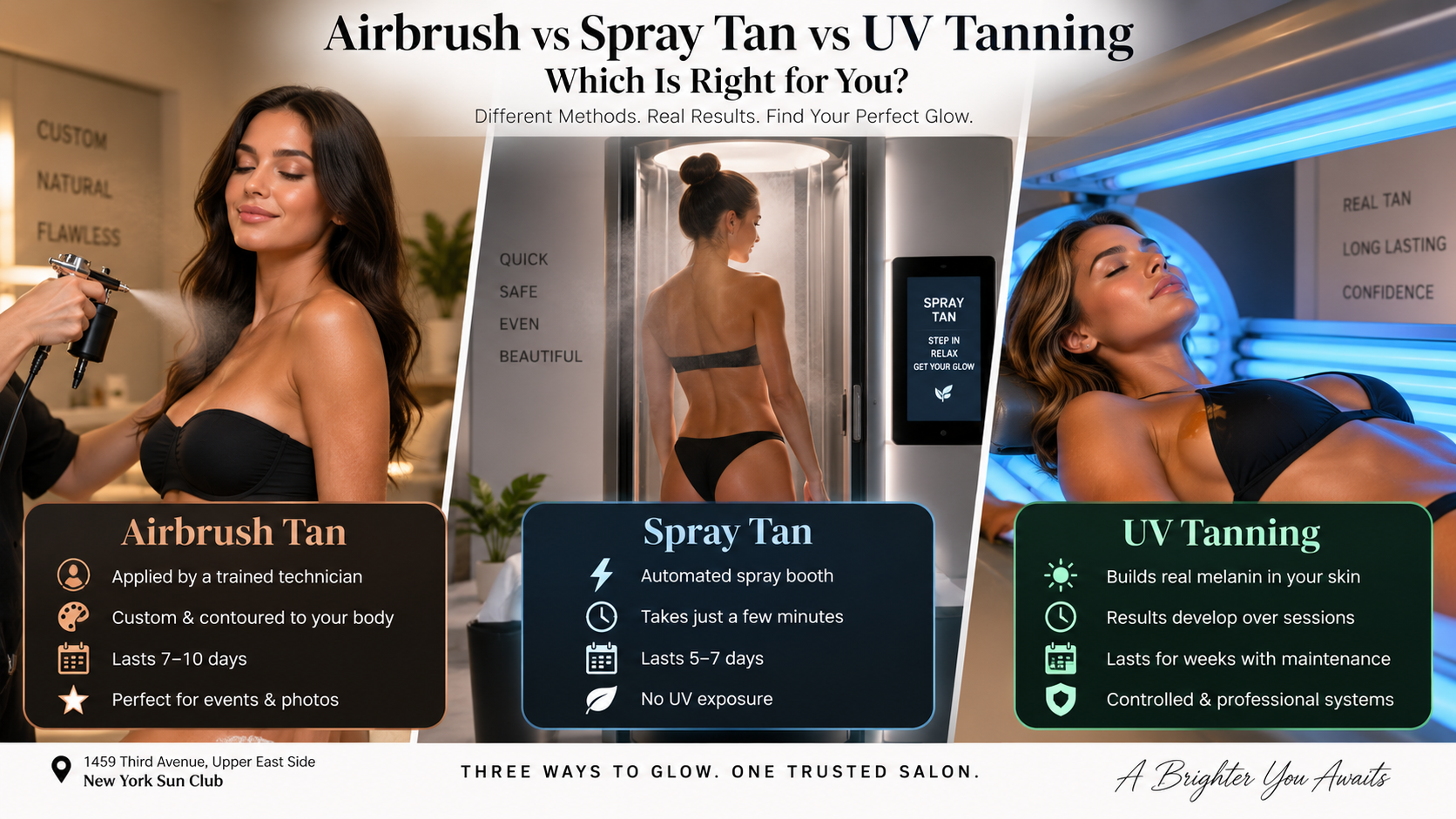
Every week someone stands at the front desk on the third floor of 1459 Third Avenue and asks the same question in slightly different words: airbrush vs spray tan vs UV tanning, which one should I actually get? It is the right question, and almost nobody online answers it honestly, because most salons offer one or two of the three and quietly steer you toward whatever they have. New York Sun Club offers all three under one roof on the Upper East Side, which means this guide can afford to tell the truth about each one: how it works, how long it lasts, what it costs, who it suits, and when it is the wrong choice entirely. By the end you will know which door to walk through, and why.
The One Minute Version
If you want the answer before the explanation, here it is. UV tanning builds real melanin in your skin over multiple short sessions and holds for weeks with maintenance, at the cost of ultraviolet exposure. The spray booth applies a sunless solution automatically in minutes, develops over a few hours, and lasts about five to seven days with no UV at all. Custom airbrush applies the same kind of sunless solution by hand, contoured to your body and matched to your skin, lasts seven to ten days, and is the choice for events and photographs. Everything below is the detail that makes that summary trustworthy.
How Each One Actually Works
UV Tanning: The Real Tan
A UV tanning bed or stand up does what the sun does, in a controlled dose. Two spectrums of ultraviolet light work together. UVB rays are the activation rays that stimulate the skin’s melanocyte cells to bring melanin to the surface, penetrating less deeply and carrying more of the burn risk. UVA rays are the browning rays that penetrate a little deeper and turn that melanin from pink to brown over a few hours. High pressure and high performance European systems emphasize the UVA spectrum, which is why they produce deeper, longer lasting color with less of the burning component per minute than conventional beds, and why a serious salon runs several different machines rather than one. The tan is your own skin’s pigment, which is why it holds and why it fades slowly as skin renews.
The Spray Booth: Automated Sunless Color
Sunless tanning uses no ultraviolet light at all. The active ingredient, DHA, is a simple sugar that reacts with the amino acids in the skin’s outermost layer to produce a golden brown color, a surface reaction rather than a change in melanin. In a spray booth, the application is automated: you step into a private enclosure, follow voice prompts through a few positions, and nozzles mist the solution evenly over the whole body in a matter of minutes with no technician in the room. The color begins developing two to three hours later, peaks around six hours, and lasts roughly five to seven days as the outer skin naturally exfoliates.
Custom Airbrush: Sunless Color by Hand
Airbrush tanning uses the same DHA chemistry with a completely different delivery. A trained technician applies the solution with a handheld airbrush, controlling where the color goes, how deep it reads in each area, and how the shade matches your natural skin tone and the occasion. The result is contoured rather than uniform, which is why airbrush suits photographs, weddings, and anyone who wants the tan designed rather than dispensed, and why properly applied airbrush color tends to last seven to ten days. It develops on the same timeline as the booth and, like the booth, involves no UV exposure whatsoever.
Airbrush vs Spray Tan: The Head to Head
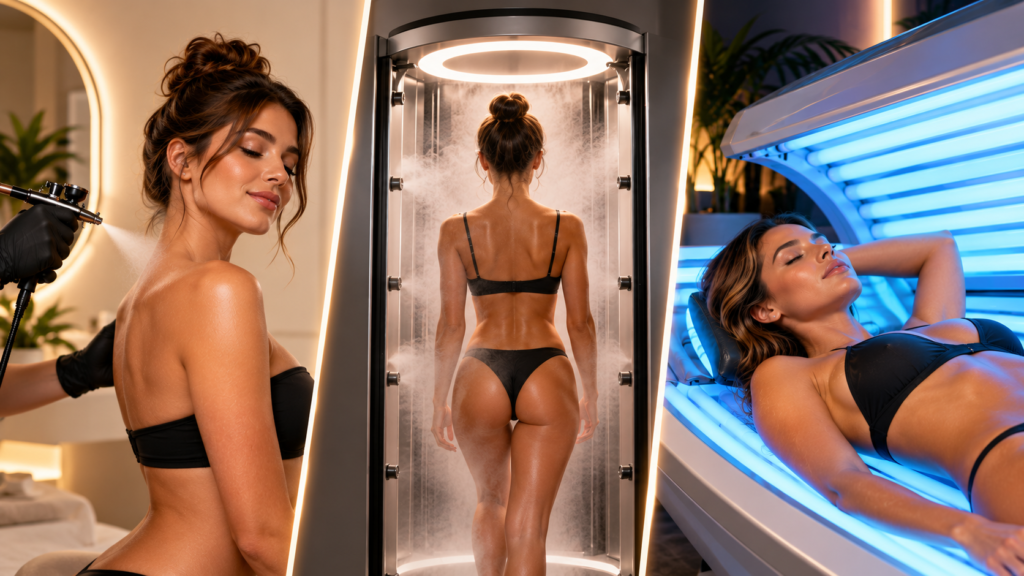
Since this is the comparison most people are actually making, it deserves its own section. Both are sunless, both use DHA, both develop in hours, and both are fully UV free, so the difference is entirely in application and outcome. The booth wins on speed, privacy, and consistency: the session takes minutes, the door closes, and the application is identical every single visit, which makes it the natural choice for weekly maintenance and for first timers who want no audience. Airbrush wins on precision and longevity: the technician contours the color to your body, adjusts depth by area, corrects for the parts of you that grab or resist solution, and matches the shade to your skin, which is why airbrush color reads more natural in photographs and lasts a few days longer.
Cost follows the labor. At New York Sun Club, custom airbrush sessions start at 80 dollars for a single express tan, with packages lowering the per session price substantially, while booth sessions run less per visit and are also packaged for regulars. The salon publishes its prices, which is worth noting in a city where most do not. The full menu and current package tiers live on the custom airbrush tanning page. The honest rule of thumb: booth for the routine, airbrush for the occasion.
Spray Tan vs UV Tanning: The Real Decision
The bigger fork in the road is between sunless and UV, and it comes down to four questions. First, do you want color today or color for the season? Sunless delivers full color in one session and fades in a week; UV builds gradually across sessions and then holds for weeks with light maintenance. Second, how does your skin respond to sun? Fair skin that burns easily is a sunless candidate almost by definition, while skin that tans readily can build a UV base safely under certified supervision. Third, what is the occasion? An event this weekend wants sunless, because it is fast and predictable; a season of looking tan wants UV, because it is durable. Fourth, and most important, how do you feel about ultraviolet exposure? UV tanning carries real risks, which the next section states plainly, and sunless carries none of them.
Honest About the Risks of Each
A comparison that hides the risks is a sales page. Here are the facts. Ultraviolet exposure, indoors or out, is associated with skin cancer including melanoma, premature skin aging, sunburn, and eye injury without protection. That is why tanning equipment is regulated and rated for maximum exposure time, why New York Sun Club’s staff are Smart Tan certified to match sessions to skin type, why protective eyewear is mandatory in every machine, and why the house rule is never burn, because a sunburn does not become a tan; it blocks the tan while raising the risk.
Sunless tanning avoids ultraviolet entirely, and DHA has a long history of cosmetic use, but it is not without guidance of its own. The U.S. Food and Drug Administration, which regulates DHA as a color additive, notes that it is approved for external application and recommends protecting the eyes, lips, and mucous membranes and avoiding inhalation during spray applications, which is exactly why a properly run booth provides protective measures and a trained airbrush technician controls the application. The FDA’s own guidance on sunless tanners and bronzers is the primary source, and a salon that follows it is a salon worth trusting. One more sunless fact worth knowing: a spray tan is not sunscreen. The color offers no meaningful UV protection, so a sunless tan on a beach still needs SPF.
How Long Each One Lasts, and Why
Duration is where expectations get broken, so here is the honest ledger. A booth tan lasts about five to seven days. An airbrush tan lasts about seven to ten. Both fade as the outer layer of skin naturally exfoliates, which is why moisturizing daily extends them and hot soaks, chlorine, heavy exfoliation, and acetone shorten them. A UV tan behaves differently: it takes a series of short sessions spaced a day or two apart to build a base, typically over the first couple of weeks, then holds for weeks with a maintenance session every week or two on a high performance system. The sunless tan is a rental; the UV tan is a lease. Neither is better, but confusing them is how people end up disappointed on day eight.
Preparation and Aftercare, Side by Side
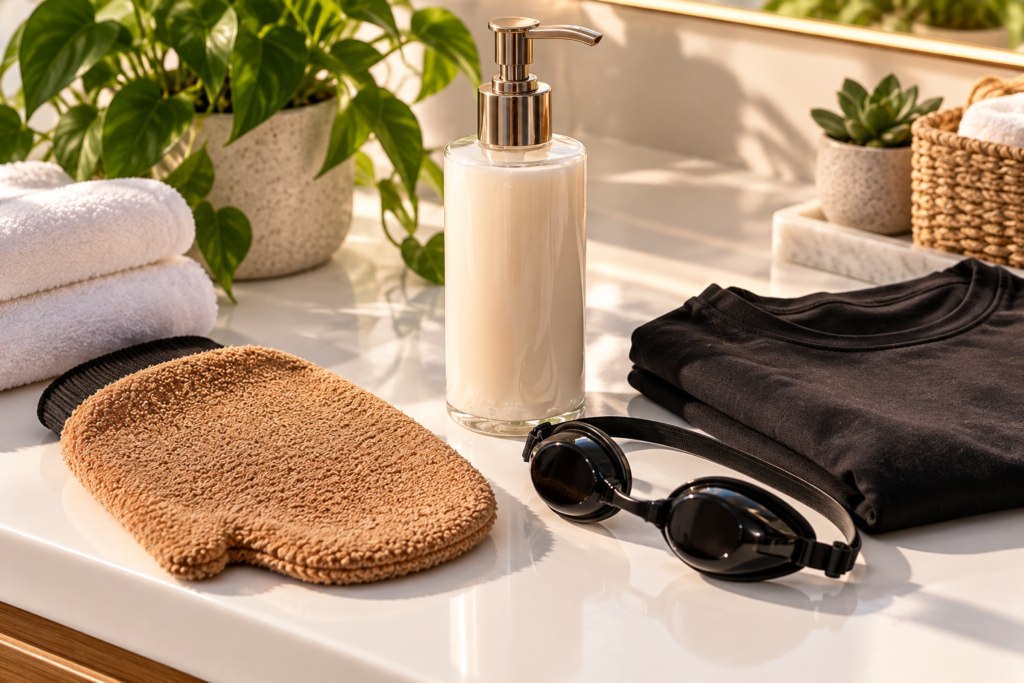
For sunless, the preparation is everything. Exfoliate the night before or the morning of, shave or wax at least a day ahead, arrive with no lotion, oil, deodorant, or makeup, bring dark loose clothing to change into, and stay dry until the first shower rinses off the color guide. Afterward, moisturize daily, pat dry rather than rub, and avoid long hot water, chlorine, and exfoliation for the life of the tan. For UV, the preparation is lighter: clean skin, a quality tanning lotion, mandatory eyewear, and a short first session that builds over visits rather than forcing a base in one. Afterward, moisturize to keep the color even and respect the spacing between sessions, because skin needs a day or two to develop color safely and stacking sessions raises burn risk without improving results.
Who Should Choose Which
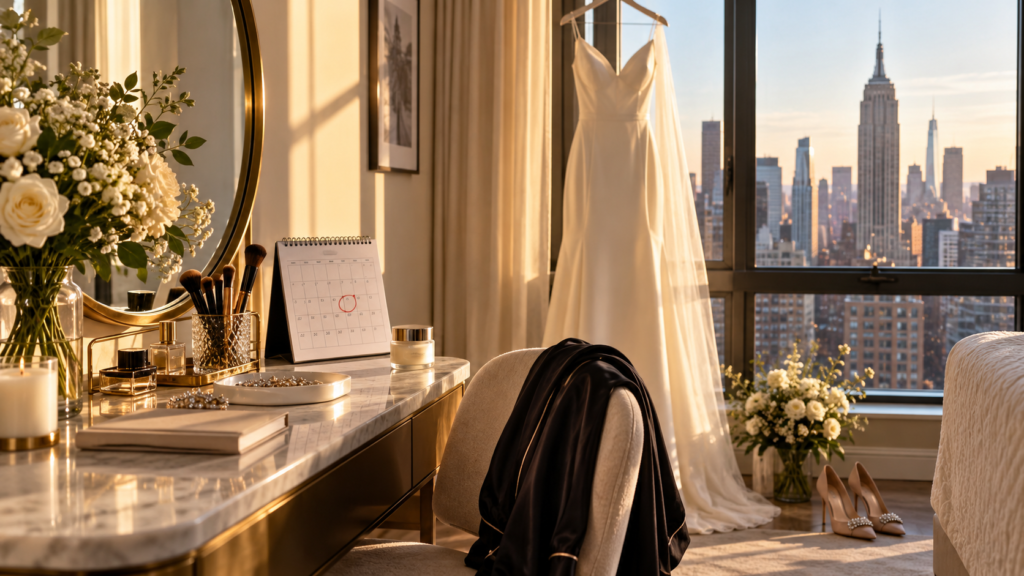
Match the person to the method. The bride, the gala guest, and anyone facing a photographer within the week should choose airbrush, booked one to two days before the event so the color peaks on the day. The weekly maintenance client who wants reliable color with no ceremony should choose the booth. The client with fair skin, a family history of skin cancer, or simply a preference to avoid UV should choose sunless in either form, without apology and without a consolation prize framing. The client with skin that tans readily, a season of events ahead, and a certified salon to supervise the build should consider UV, in short sessions on the right machine, with the never burn rule enforced. And plenty of Upper East Side regulars combine them intelligently: a UV base for the season plus an airbrush the week of the wedding, or a booth spray to bridge the gap while a base builds. The UV tanning beds and stand ups on the third floor exist precisely so that combination is available in one building.
The Five Mistakes People Make Choosing Between Them
After enough front desk conversations, the failure patterns repeat, and naming them saves you from most of them. The first is booking sunless the morning of the event, when the color has not peaked and the guide has not rinsed; the fix is one to two days ahead, always. The second is treating UV like a sprint, stacking daily sessions to force a base, which burns instead of builds; the fix is the spacing your certified staff recommend. The third is skipping exfoliation before a spray or airbrush session, which produces the streaks that give sunless a bad name; the fix is the night before, every time. The fourth is assuming a sunless tan is sun protection, and burning under it on the first beach day; the fix is SPF, regardless of color. And the fifth is deciding the airbrush vs spray tan question on price alone, when the real variable is the occasion: the booth for the routine week, the airbrush for the day that gets photographed. Avoid those five and any of the three methods delivers what it promises.
What Each One Costs, Honestly
Cost sits underneath every airbrush vs spray tan conversation, so here is the plain ledger. Airbrush is the most labor intensive and priced accordingly, starting at 80 dollars for a single express session at New York Sun Club, with packages of five and ten bringing the per session cost down for regulars. Booth sessions cost less per visit because the application is automated, and they package the same way. UV sessions are sold as singles and as multi session packages, and because a UV base is built over a series of short sessions and then maintained lightly, the per week cost of a season of color is often lower than people expect. The salon publishes all of it openly, which is rare enough in Manhattan to mention twice, and the front desk on the Upper East Side salon’s homepage quotes any option without a pitch. Price should sort the frequency, not the method: choose the method for the occasion and the package for how often the occasion repeats.
The Questions to Ask Any Salon
Wherever you go, five questions sort the good rooms from the rest. Are your staff certified to match sessions to skin type? What is the maximum exposure rating on this machine, and how are my minutes set? Is your sunless solution matched to my skin tone, or is there one shade for everyone? What do you recommend if I have a photographed event in three days? And do you publish your prices? A salon that answers all five without hesitation has told you everything about how the rest of the relationship will go. New York Sun Club answers them at the desk on Third Avenue every day, which is the entire reason the neighborhood keeps taking the elevator.
Frequently Asked Questions
Is airbrush or spray tan better?
Neither is better; they suit different needs. The booth is faster, private, and identical every visit, ideal for weekly maintenance. Airbrush is applied by hand, contoured to your body, matched to your skin tone, and lasts a few days longer, ideal for events and photographs.
Which lasts longer, spray tan or UV tanning?
UV tanning lasts longer once a base is built, holding for weeks with maintenance sessions, while a spray tan lasts five to seven days and an airbrush tan seven to ten. Sunless is faster to get and quicker to fade; UV is slower to build and more durable.
Is spray tanning safer than UV tanning?
Sunless tanning avoids ultraviolet exposure entirely, so it carries none of the UV related risks. DHA is FDA approved for external use, with guidance to protect the eyes, lips, and mucous membranes during spray application, which a properly run salon follows.
Does a spray tan protect against sunburn?
No. Sunless color provides no meaningful UV protection. Wear sunscreen outdoors regardless of a spray or airbrush tan.
Can I combine UV tanning and a spray tan?
Yes, and many clients do: a UV base for lasting color with a booth or airbrush session before an event. Space the sunless application after the UV session rather than before, and follow normal sunless preparation.
How much does airbrush tanning cost in NYC?
At New York Sun Club on the Upper East Side, custom airbrush starts at 80 dollars for a single express session, with multi session packages lowering the per tan cost, and all prices are published openly on the salon’s airbrush page.
The Bottom Line
Three methods, three different promises. UV builds your own pigment slowly and keeps it for the season, with certified supervision and real risks stated plainly. The spray booth delivers full color in minutes behind a closed door and hands it back in a week. Airbrush designs the color by hand for the days that get photographed. The right one is the one matched to your skin, your calendar, and your comfort with the sun, and the only honest place to make that match is a salon that offers all three and will tell you which one you do not need. On the Upper East Side, that room is on the third floor of 1459 Third Avenue, open seven days, at (212) 776-1000. Take the elevator, and ask the question in person.
