Home/Tanning Salon Upper East Side/Tanning FAQs: UV, Spray and Airbrush Tanning Answered
New York Sun Club
Tanning FAQs: UV, Spray and Airbrush Tanning Answered
The most common tanning questions come down to three things: which method is right for you, how to prepare, and what’s safe. In short, UV tanning builds color gradually with ultraviolet light and carries real health risks, while spray booth and airbrush tanning give you color in one visit with no UV exposure and last about a week.
- Upper East Side, 3rd Ave at 86th St
- Open 7 days
- UV · Spray · Airbrush

Below are straight answers to the questions we hear most at New York Sun Club, grouped by topic. We’ve tried to answer them the way we would at the front desk, including the parts some salons would prefer to skip.
Our Upper East Side salon is at 1459 3rd Ave, 3rd floor, New York, NY 10028. We’re open Monday to Friday 10 am to 9 pm, Saturday 10 am to 6 pm and Sunday 10 am to 8 pm. Phone (212) 776-1000.
Which tanning method should you choose?
Choose sunless tanning if you want color quickly or want to avoid UV light, and consider UV tanning only if your skin tans without burning and you understand the risks. This table sums up the differences.
| UV tanning | Mystic spray booth | Custom airbrush | |
|---|---|---|---|
| How it works | Ultraviolet light triggers melanin | DHA mist colors the skin’s surface | DHA applied by hand by an artist |
| UV exposure | Yes | None | None |
| When you see color | Gradually, over several sessions | Within hours | Within hours |
| How long it lasts | Fades over weeks without upkeep | 5 to 7 days | 7 to 10 days |
| Single session | From $25 | $45 | $79 |
| Appointment | Walk in | Walk in | Required |
| Minimum age in New York | 18 | No state age limit | No state age limit |
What is the difference between UV tanning, a spray tan and an airbrush tan?
UV tanning uses ultraviolet lamps to make your skin produce more pigment. A spray tan and an airbrush tan both use DHA, a colorless ingredient that browns the surface of the skin, with no UV involved. A spray booth applies it automatically, and airbrush is applied by a technician. Our guide to airbrush vs spray tan vs UV tanning compares them in depth.
Which type of tan lasts the longest?
A UV tan lasts longest once it’s built, often a few weeks before it fades, but it takes multiple sessions to develop. Among sunless options, a custom airbrush tan lasts about 7 to 10 days and a spray booth tan about 5 to 7 days.
Which tan is best before a wedding or vacation?
For a wedding or event, a custom airbrush tan one to two days beforehand gives the most even, controlled result. For a vacation, a sunless tan gives you color on arrival, but remember that it provides no sun protection, so you’ll still need sunscreen.
What should you know about UV tanning?
UV tanning works by exposing skin to controlled ultraviolet light, which darkens existing pigment and prompts the skin to make more. It’s regulated, timed and, in New York, limited to adults.
How does UV tanning work?
Tanning lamps give off UVA and UVB light. UVB stimulates the cells that produce melanin, your skin’s pigment. UVA darkens that pigment. The result is a tan that builds over several sessions. A tan is your skin’s response to UV exposure, which is why moderation matters.
How long is a tanning bed session?
Session length depends on the bed, your skin type and your tanning history. First sessions are short, often just a few minutes, and increase gradually. Every unit has a maximum exposure time set under FDA rules, and our staff set your time for you. Longer isn’t better. A burn sets you back and damages your skin.
How often can you use a tanning bed?
Leave at least 24 to 48 hours between UV sessions, and never tan twice in one day. Once you have the color you want, one or two sessions a week is typically enough to maintain it. More sessions mean more UV exposure and more risk.
What is the difference between tanning levels?
Levels describe the equipment. Lower levels are traditional beds and stand-ups. Higher levels use stronger or high-pressure lamps and usually need shorter sessions. At our Manhattan salons, single sessions run from $25 at Level 1 to $48 at Level 5. The right level depends on your skin, not on how fast you want results.
Should you choose a stand-up or a lay-down bed?
It’s mostly personal preference. Stand-ups give even, all-over exposure with no pressure points, and some people like not touching a surface. Lay-down beds are more relaxing. Our UV tanning beds and stand-ups page lists the equipment at our Upper East Side salon and explains what each one is like to use.
Do you need to wear goggles in a tanning bed?
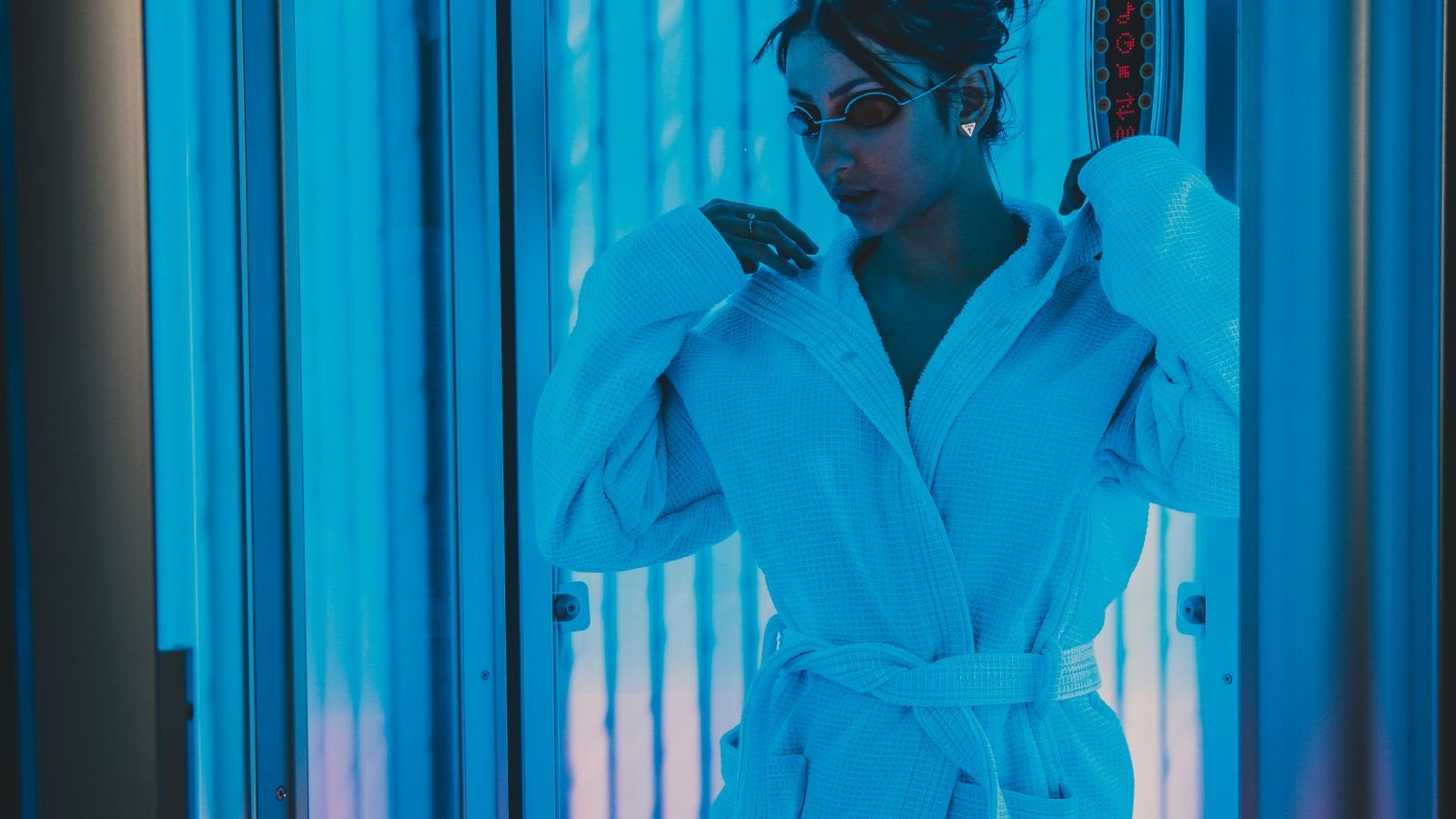
Yes, always. Protective eyewear is required for every UV session. Closing your eyes, or covering them with a towel, doesn’t block ultraviolet light, and unprotected exposure can injure the eyes and contribute to cataracts over time.
Do you need tanning lotion?
Indoor tanning lotion isn’t legally required, but it helps. UV light dries the skin, and dry skin reflects light and fades faster. Use a lotion made for indoor tanning. Outdoor sunscreens and oils aren’t designed for tanning beds and can damage the acrylic surfaces.
Is tanning safe?
UV tanning is not risk-free, and sunless tanning is considered the safer way to get color. That’s the honest answer, and it’s the one health authorities give.
Is indoor UV tanning safe?
No form of UV tanning is completely safe. Ultraviolet light from tanning beds, like sunlight, increases the risk of skin cancer, including melanoma, and causes premature skin aging. It can also damage the eyes. The FDA requires warning labels on tanning equipment for these reasons. If you choose to tan, limit your exposure, never burn, always wear eye protection and check your skin regularly for changes.
Who should not use a tanning bed?
You shouldn’t use a tanning bed if you’re under 18, if you have very fair skin that always burns and never tans, or if you have a personal or family history of skin cancer. You should also avoid it if you’re taking medication that increases sensitivity to light. Common examples include certain antibiotics, acne treatments, diuretics and some antidepressants. Ask your doctor or pharmacist if you’re unsure, and tell our staff what you take.
Does a base tan protect you from sunburn?
Only very slightly. A base tan offers protection roughly equal to a low SPF of about 3 or 4, which isn’t enough to prevent sunburn or skin damage. It’s no substitute for sunscreen, shade and covering up on vacation.
Can you tan while pregnant?
Check with your doctor first. Many doctors advise against tanning beds during pregnancy because of overheating. Sunless tanning is generally seen as the lower-risk option, with care taken not to inhale the mist, but your own doctor’s advice comes first.
How old do you have to be to tan in New York?
You must be at least 18 to use UV tanning equipment in New York State. We ask for photo ID. Sunless tanning doesn’t use UV and isn’t covered by that law.
What should you know about spray booth tanning?
A spray booth gives you a UV-free tan in a few minutes inside a private, automated stall. Our Upper East Side salon uses a Mystic booth.
How does a spray tan booth work?
You step into a private booth, stand in a few simple positions as prompted, and nozzles apply a fine mist of DHA solution evenly over your body. It takes a few minutes. The color begins to develop within two to three hours and reaches its peak at around six hours.
How long does a spray tan last?
A spray booth tan typically lasts 5 to 7 days. How long yours lasts depends on your skin, your prep and your aftercare. Moisturizing daily helps most. We go into more detail in our article on how long a spray tan lasts.
Is spray tanning safe?
DHA is approved by the FDA for external application to the skin. The FDA advises that it shouldn’t be inhaled or get into the eyes, on the lips or on mucous membranes. Keep your eyes and mouth closed during the spray, and ask us about protective options such as nose filters and lip balm. If you have asthma, allergies or sensitive skin, talk to your doctor and let us know before your session.
Does a spray tan protect you from the sun?
No. A sunless tan contains no sunscreen and gives no protection against UV light. You can burn just as easily with a spray tan as without one, so wear sunscreen outdoors.
What should you know about airbrush tanning?
Airbrush tanning is a custom, hand-applied sunless tan that takes about 20 to 30 minutes and lasts 7 to 10 days. It’s by appointment.
How does airbrush tanning work?
A technician sprays a DHA solution onto your skin with a handheld airbrush, adjusting the shade and the amount for each area of the body. Because it’s done by a person, the color can be tailored to your skin tone and blended around existing tan lines.
Will a spray or airbrush tan turn you orange?
It shouldn’t. Orange results usually come from a solution that’s too dark for the person’s skin tone, or from skin that wasn’t prepared properly. Choosing a shade close to what you’d reach naturally, and exfoliating beforehand, gives a believable result.
How do you prepare for a spray or airbrush tan?
Exfoliate and shave the day before. On the day, shower and skip lotion, oil, deodorant, perfume and makeup. Wear dark, loose clothing and slip-on shoes. Have waxing done two or three days ahead, and finish manicures or pedicures at least two hours before your session.
How long should you wait to shower after a spray or airbrush tan?
Wait at least 6 hours after a standard sunless tan, then rinse with warm water and no soap. Pat dry. Until that first rinse, avoid water, sweating and tight clothing. Express formulas are rinsed sooner, and your technician will give you the exact time.
What should you wear during an airbrush tan?
Whatever you’re comfortable in: a swimsuit, underwear or nothing. Our airbrush team is all female and professional. Men are required to wear underwear, and disposable undergarments are available.
When should you book an airbrush tan before an event?
Book one to two days before. The color looks its best during the first three days. Our wedding and event spray tan timeline gives a full countdown, including when to schedule waxing, nails and facials.
How do you make a tan last longer?
Keep your skin moisturized, avoid harsh exfoliation and treat it gently in the shower. Those three habits help every kind of tan, UV or sunless.
How do you make a spray or airbrush tan last longer?
Moisturize every morning and night with a lotion free of mineral oil and alcohol. Take short, warm showers and pat yourself dry. Avoid scrubs, loofahs, retinol body products and acne washes on tanned skin. Chlorine and long soaks in hot tubs strip sunless color quickly, and heavy sweating wears it off under straps and waistbands. A top-up session every week or two keeps the color even.
Why did my spray tan fade unevenly?
Patchy fading usually traces back to dry skin, friction or skipped prep. Elbows, knees, ankles and hands fade first because the skin there is drier and sheds faster. Tight clothing and bag straps rub color away. Next time, exfoliate the day before, moisturize daily afterward and wear loose clothes for the first day.
How do you remove a spray tan that has gone patchy?
Soak in a warm bath for 15 to 20 minutes, then exfoliate gently with a mitt or a sugar scrub. Don’t scrub hard. It may take two or three days of gentle exfoliation to even things out. Always remove old color before a fresh application.
What mistakes do first-time tanners make?
The most common first-timer mistakes are doing too much too soon with UV and arriving unprepared for a sunless tan. Both are easy to avoid.
What should a first-time tanner know?
Start slowly. For UV tanning, your first session should be short, and you should wait at least a day or two before the next. Tell the staff your skin type and whether you burn easily, and mention any medications. For sunless tanning, come with clean, exfoliated skin and no lotion or deodorant. Either way, ask questions. A good salon will explain the equipment, set your time and tell you plainly if a method isn’t right for your skin.
What should you know before you visit?
You can walk in for UV tanning and the spray booth, and you’ll need to book ahead for airbrush. First-time visitors should allow a few extra minutes for a skin-type consultation.
Do you need an appointment to tan at New York Sun Club?
No appointment is needed for UV beds or the Mystic spray booth. Custom airbrush tanning is by appointment only, and the end of the week books up quickly.
How much does tanning cost at New York Sun Club?
Single sessions start at $25 for Level 1 UV tanning, $45 for the Mystic spray booth and $79 for custom airbrush. Packages and 30-day or 60-day memberships reduce the cost per visit, and there are first-time offers for new customers. Current deals are listed on our promotions page.
What should you bring to your first tanning visit?
Bring a photo ID. For UV tanning, bring or buy protective eyewear and indoor tanning lotion. For sunless tanning, bring dark, loose clothes to wear home. Remove contact lenses before UV tanning if they bother you, and take off jewelry.
Where is New York Sun Club on the Upper East Side?
We’re at 1459 3rd Ave, 3rd floor, New York, NY 10028, at East 82nd Street. The 86th Street stations on the 4, 5, 6 and Q lines are a short walk away.
What are your hours?
Our Upper East Side salon is open Monday to Friday 10 am to 9 pm, Saturday 10 am to 6 pm and Sunday 10 am to 8 pm.
Can you tan if you have a tattoo?
Yes, with care. UV light fades tattoo ink over time, so cover tattoos with a high-SPF balm or sunscreen stick during UV sessions. Don’t tan over a new tattoo until it has healed completely. Sunless tanning doesn’t harm tattoos, though the color may briefly dull their appearance.
Still have a question?
If your question isn’t answered here, call us at (212) 776-1000 or stop by 1459 3rd Ave, 3rd floor, New York, NY 10028. We’re open seven days a week.
There’s no such thing as a silly tanning question. We’d much prefer you ask before your session than guess. If we think a different method suits your skin better, or that you shouldn’t use a UV bed at all, we’ll tell you.
