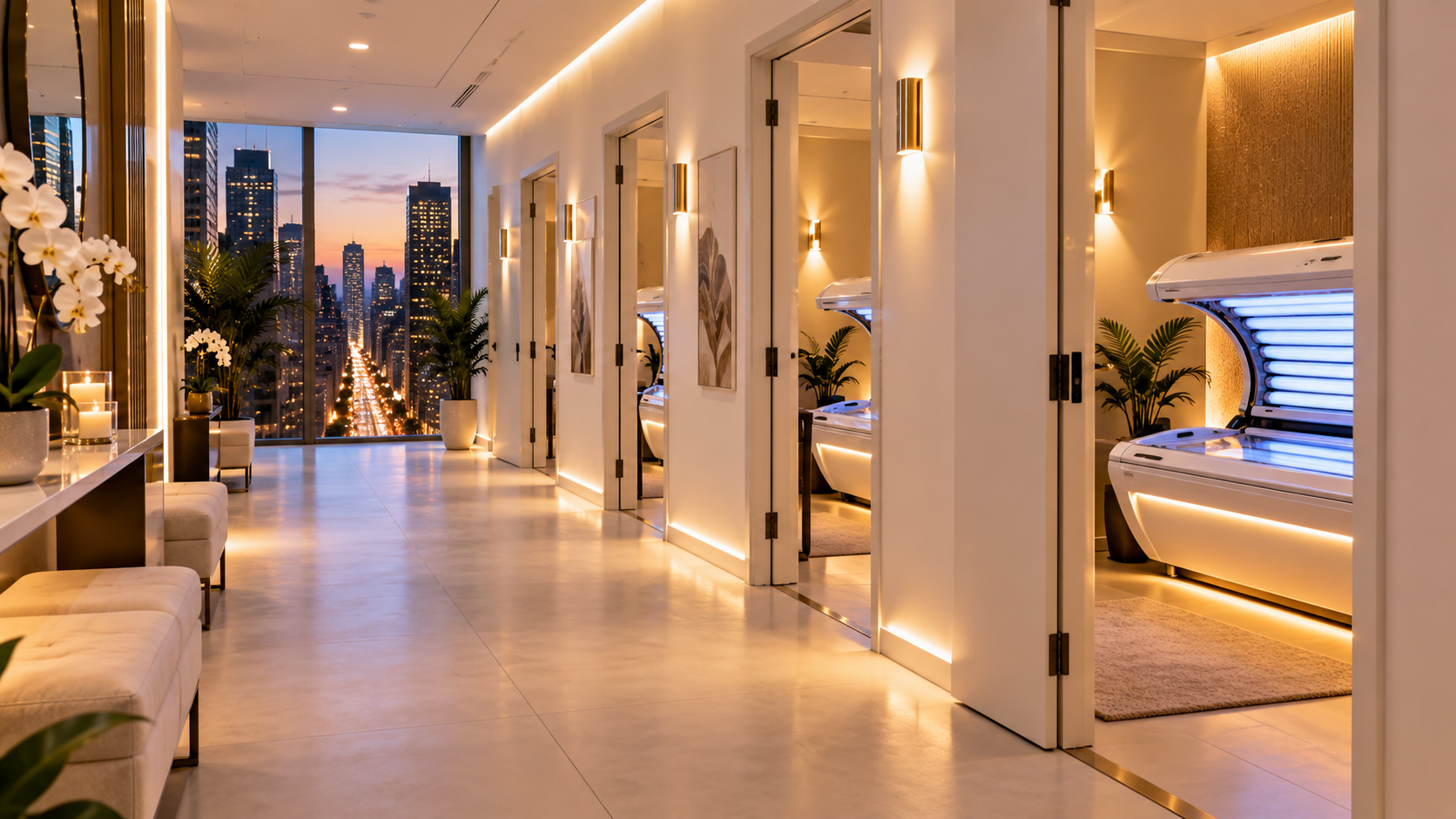
UV Tanning Beds & Stand-Ups on the Upper East Side
A tanning bed is not a tanning bed. The difference between a session that leaves you pink on Tuesday and pale by Friday and a session that builds deep, even color that carries through the month lives in the equipment, the spectrum it emits, and the person deciding which machine your skin belongs in. On the third floor at 1459 Third Avenue, New York Sun Club runs the widest lineup of European UV tanning systems on the Upper East Side, seven distinct machines spanning lay down beds and stand up units, conventional and high pressure, gentle first session technology and the intensity serious tanners request by name. This page walks the room one machine at a time, explains how sessions are matched to skin, and states the safety facts plainly, because the neighborhood reads the fine print and deserves a salon that writes it.
The Room, Machine by Machine
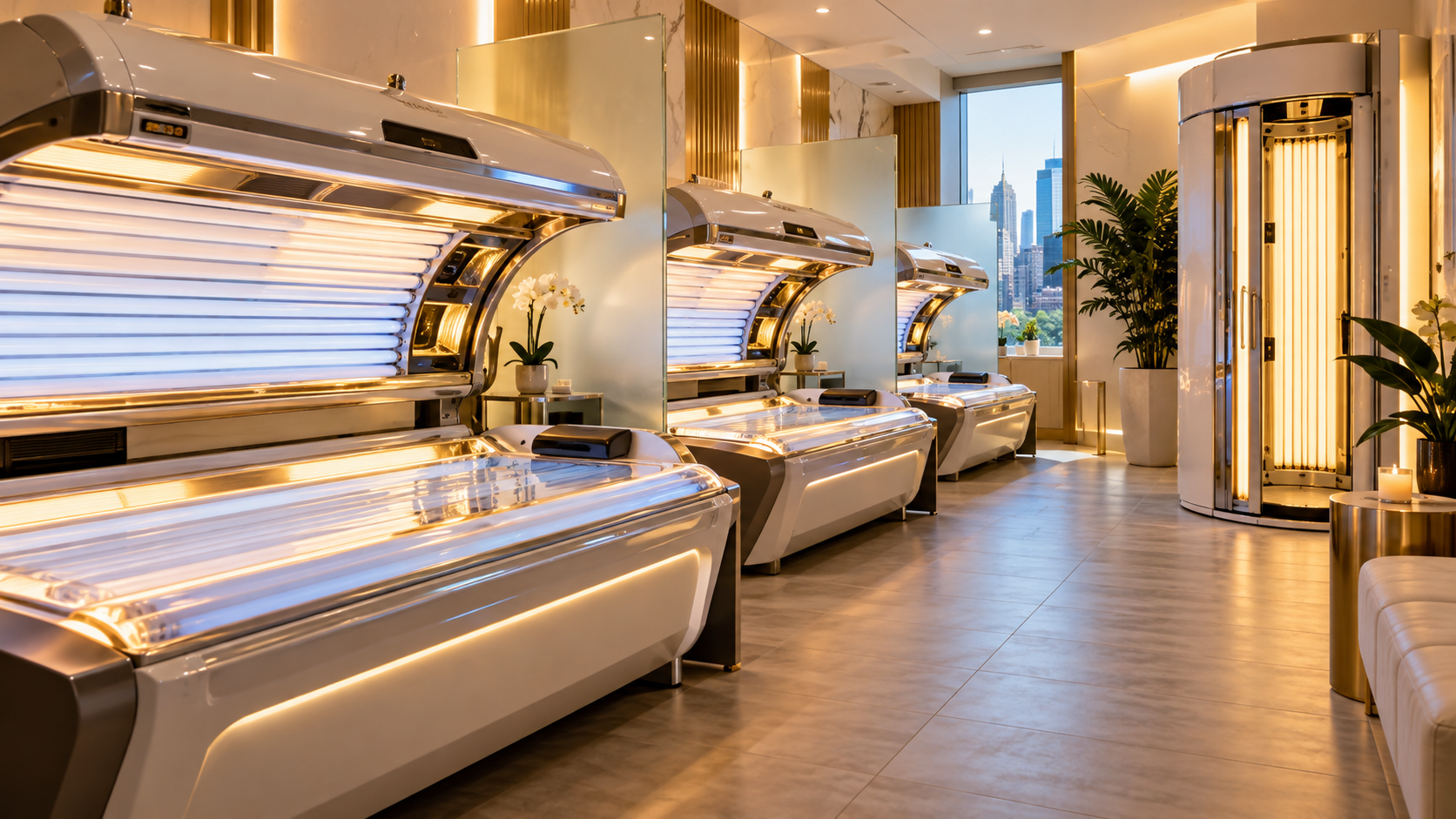
The lay down side opens with the Elixir 40/3, the salon's high performance flagship, engineered for deep, uniform color in short sessions and the bed most returning clients ask for by name. Beside it, the German built UWE S-Class serves as the luxury experience, a session designed to feel like the reward as much as the result, and the UWE Cayenne brings the same engineering to a slightly different intensity profile for clients building toward the S-Class. The KBL 6800 Alpha completes the German trio, a flagship for tanners who want performance and know exactly what they mean by it.
The stand up side serves the client who prefers minutes to lounging and wants no pressure points, no contact, and no lines. The Matrix High Pressure stand up produces fast, uniform color from every angle, the Sun Capsule stand up does the same for clients who like the enclosed booth format, and the Sungate rounds out the room as the measured, gentler option for first sessions, fair skin, and anyone rebuilding a base after time away. Seven machines is not decoration. It is how one room serves fair and olive skin, first visits and maintenance visits, lunch breaks and Sunday afternoons, with the same standard of result.
High Pressure, Explained Without the Brochure
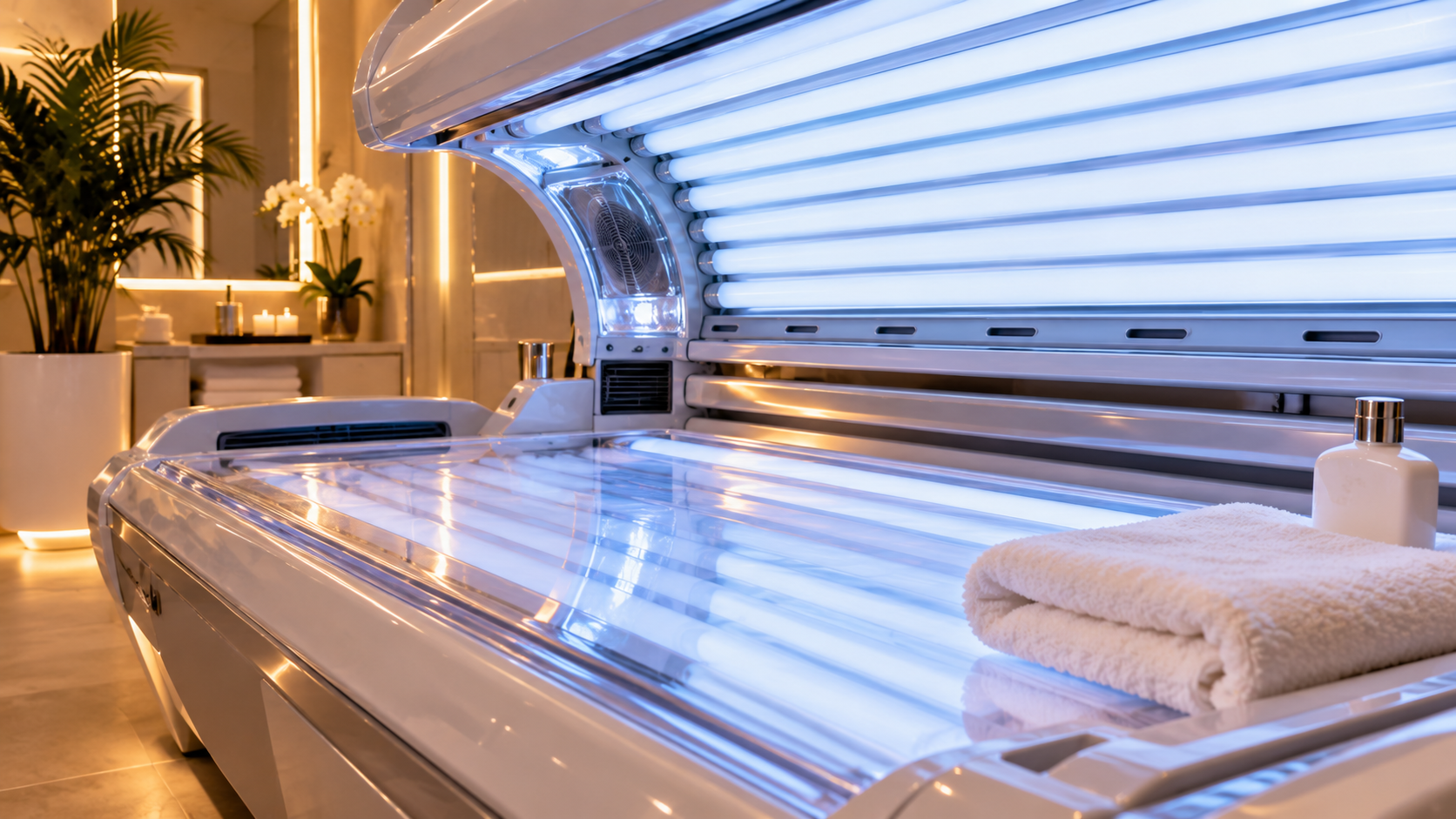
The phrase appears on every tanning menu in Manhattan and is almost never explained, so here it is. Two spectrums of ultraviolet light produce a tan together. UVB rays are the activation rays, penetrating less deeply, stimulating the skin to bring melanin to the surface, and carrying the higher burn risk. UVA rays are the browning rays, penetrating a little deeper, turning that melanin from pink to brown, and taking a few hours longer to show their full result. Conventional beds lean on a higher UVB share, which produces a quicker effect and a shorter lasting one. High pressure and high performance systems emphasize UVA, which means deeper color, longer lasting results, fewer sessions to maintain, and less of the burning component in every minute you spend under the lamps.
That is why the lineup matters beyond marketing. A client with fair skin starting a base belongs in a measured session on a gentler machine; a client maintaining a deep tan belongs in a high pressure session that extends the color without rebuilding it from scratch. Every machine in the room is FDA regulated and rated for a maximum exposure time, and the Smart Tan certified staff match the machine and the minutes to your skin type rather than to the nearest empty bed.
How a Session Is Matched to Your Skin
The first conversation takes two minutes and shapes every session after it. Staff ask about your skin type, how it responds to sun, any tanning history, medications that increase light sensitivity, and what you are actually trying to achieve, a base for a trip, color for an event, or year round maintenance. The recommendation follows: which machine, how many minutes, and how the sessions should build. First sessions are deliberately short, because a tan is built over visits and cannot be forced into one, and because the house rule is the industry's golden one: never burn. A sunburn does not become a tan. It blocks the tan while raising the risk, which is why a salon that shortens your first session is a salon protecting your fifth.
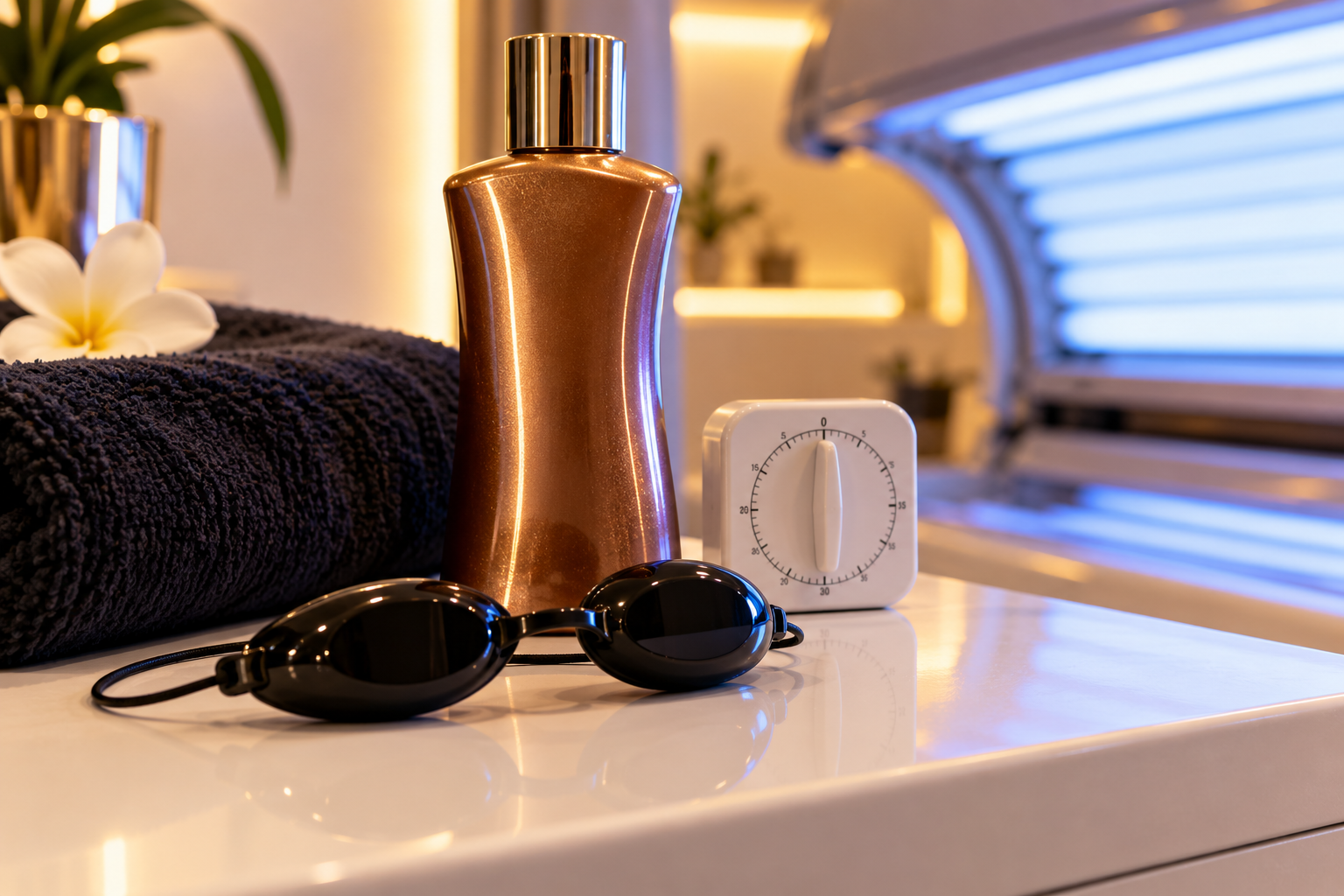
Protective eyewear is mandatory in every machine, every time, since the eyelids do not shield the eyes from UV. Quality tanning lotion improves both the result and the skin's comfort, and the room is cleaned between every session with the seriousness a third floor above Third Avenue demands. Clients leave with a rhythm rather than a guess, and the rhythm is what turns one good session into a season of them.
Honest About the Risks
Most tanning pages avoid this paragraph. This salon publishes it. Ultraviolet exposure, whether from the sun or from indoor equipment, carries real risks: skin cancer including melanoma, eye injury without proper protection, sunburn, and premature skin aging. That is exactly why the equipment is FDA regulated, why staff are Smart Tan certified, why sessions are matched and built gradually, and why the never burn rule is enforced rather than suggested. It is also why the salon's sunless side is so complete. For clients who prefer to skip UV entirely, the Mystic spray booth and custom airbrush tanning described on the Upper East Side tanning salon page deliver full color with no ultraviolet exposure at all, as a genuine alternative rather than a consolation prize. A salon that will talk you out of the wrong session is one whose right sessions you can trust.
Building a Base, Keeping a Tan
For the client starting from pale, a base tan typically builds across a series of short sessions spaced at least a day or two apart, with the minutes increasing gradually as the skin adapts, and the staff adjusting the machine as the base deepens. Once the color is established, maintenance is lighter than most people expect, often a session every week or two on a high pressure system, which is precisely where the salon's package pricing makes sense. Session and package prices are published openly, singles and multi session tiers alike, and the current structure lives on the salon's airbrush and pricing page, with the front desk quoting any option without a pitch. The hours support the rhythm: Monday through Friday from 10 in the morning until 9 at night, Saturday 10 to 6, and Sunday 10 to 8, with walk ins welcome for UV sessions every day of the week.
Frequently Asked Questions
How long is a tanning bed session? +
Sessions vary by machine and skin type, with first sessions kept deliberately short and building over visits. Every machine is rated for a maximum exposure time, and staff set your minutes to your skin rather than to the maximum.
Stand up or lay down, which is better? +
Neither is better; they suit different clients. Stand ups give fast, contact free, line free color in minutes, while lay down beds offer a longer, more relaxed session, and the high performance lay downs deliver the deepest color for maintenance tanners.
How many sessions does it take to build a base tan? +
Typically a series of short sessions spaced a day or two apart over the first couple of weeks, depending on skin type, after which maintenance drops to roughly a session every week or two.
Do I have to wear eye protection? +
Yes, in every machine, every session. Eyelids do not block UV, and protective eyewear is mandatory and provided.
Can I tan every day? +
No. Skin needs time between sessions to develop color safely, and stacking sessions raises burn risk without improving results. Staff recommend the spacing that fits your skin type and goal.
Choose the Right Machine, Not the Nearest One
Seven European systems, one certified staff, and a rule that protects your skin from your own enthusiasm: that is the UV room on the third floor. Come in for the two minute conversation, let the machine be chosen for you, and build the color the way it lasts. The salon is at 1459 Third Avenue at East 82nd Street, open seven days, at (212) 776-1000.
Call (212) 776-1000