- blog
-
by admin
Walk into any three spray tanning salons in Manhattan and you will meet two names on the booth doors: Mystic Tan and VersaSpa. Clients ask about the difference at our front desk every week, usually because a friend swears by one and a review swears by the other, and the honest answer surprises most of them. The Mystic Tan vs VersaSpa question is real, the two booths are not identical, and the differences are worth understanding before you choose a salon. But the biggest variable in your spray tan was never the brand on the door. It was the ten minutes of preparation you did the night before and the person who matched the shade to your skin. This guide explains both halves, the brand differences and the things that actually decide results, from a salon that runs a Mystic booth on the third floor above Third Avenue and has no interest in pretending the other name is bad.
Siblings, Not Rivals
Start with the fact most comparison articles skip: Mystic Tan and VersaSpa come from the same manufacturer family, the Ohio based sunless company that also produces the Norvell solutions professional airbrush technicians use. That single fact reframes the whole debate. These are not two competing technologies from two warring companies; they are two booth lines from one maker, built for slightly different salon needs, running the same essential chemistry. Both apply a DHA based solution as a fine mist, both are entirely UV free, both develop over the same timeline, and both, in a clean salon with a prepared client, produce a golden brown tan that lasts about five to seven days. A salon choosing between them is choosing a booth design and a session flow, not a fundamentally different result.
How a Spray Booth Works, Whichever Name Is on It
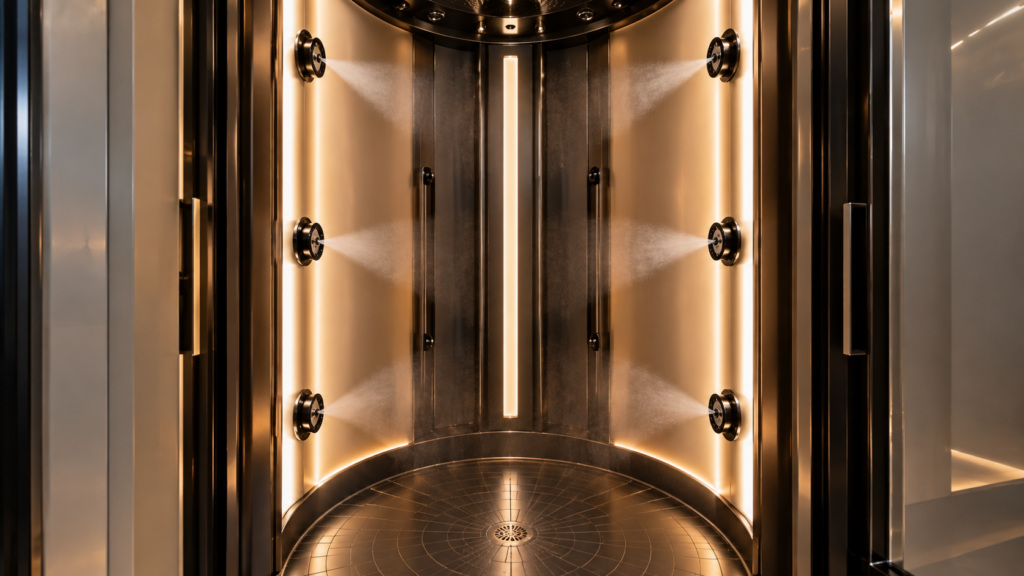
The science underneath both booths is identical and simpler than the marketing suggests. DHA, the active ingredient, is a simple sugar that reacts with the amino acids in the outermost layer of the skin to produce color, a surface reaction rather than a change in melanin, which is why it is safe for clients who cannot or prefer not to tan under UV and why it fades naturally as the skin renews. Inside either booth you stand in a private enclosure, follow voice or screen prompts through a few positions, and nozzles mist the solution evenly over the whole body in minutes with nobody else in the room. A temporary cosmetic bronzer, the color guide, shows where the solution landed and looks darker than the finished result. Color begins developing two to three hours after the session, peaks around six hours, and the first shower, timed as the salon advises, rinses the guide to reveal the settled shade. The solution is water soluble, so any guide that transfers to clothing washes out in cold water.
Where They Actually Differ
Here are the honest differences, stated without a brochure. The first is booth design and the feeling inside it. The two lines have historically taken different approaches to the enclosure, one leaning toward a more open, heated environment that some clients find less confining, the other toward a fully enclosed booth with its own warming and drying cycle, and the version installed in any given salon matters more than the brand name, because both makers have released several generations. A client who dislikes enclosed spaces should ask to see the booth before booking, whichever name it carries.
The second is the session flow: the number of positions, the spray passes, the presence and length of a heated drying phase, and the total minutes inside. Some booths dry you before you step out; others rely on the dark loose clothing you brought. Again, this is generation and configuration specific rather than a fixed brand trait. The third is the solution menu: both lines offer a range of shade depths and formula options, bronzers, clear solutions, and additives for hydration or scent, and the meaningful question is whether the salon stocks the range and matches it to your skin tone rather than running one shade for everyone. The fourth is the salon’s control. Some booth systems allow the staff to customize the spray for a client’s height, build, or areas that grab color; some run a fixed program. Ask.
What none of these differences change is the chemistry, the development timeline, the preparation, or the aftercare. A Mystic tan and a VersaSpa tan, prepared for identically and matched to the same skin, fade on the same schedule and look, to most eyes and most cameras, the same.
The Four Things That Actually Decide Your Spray Tan
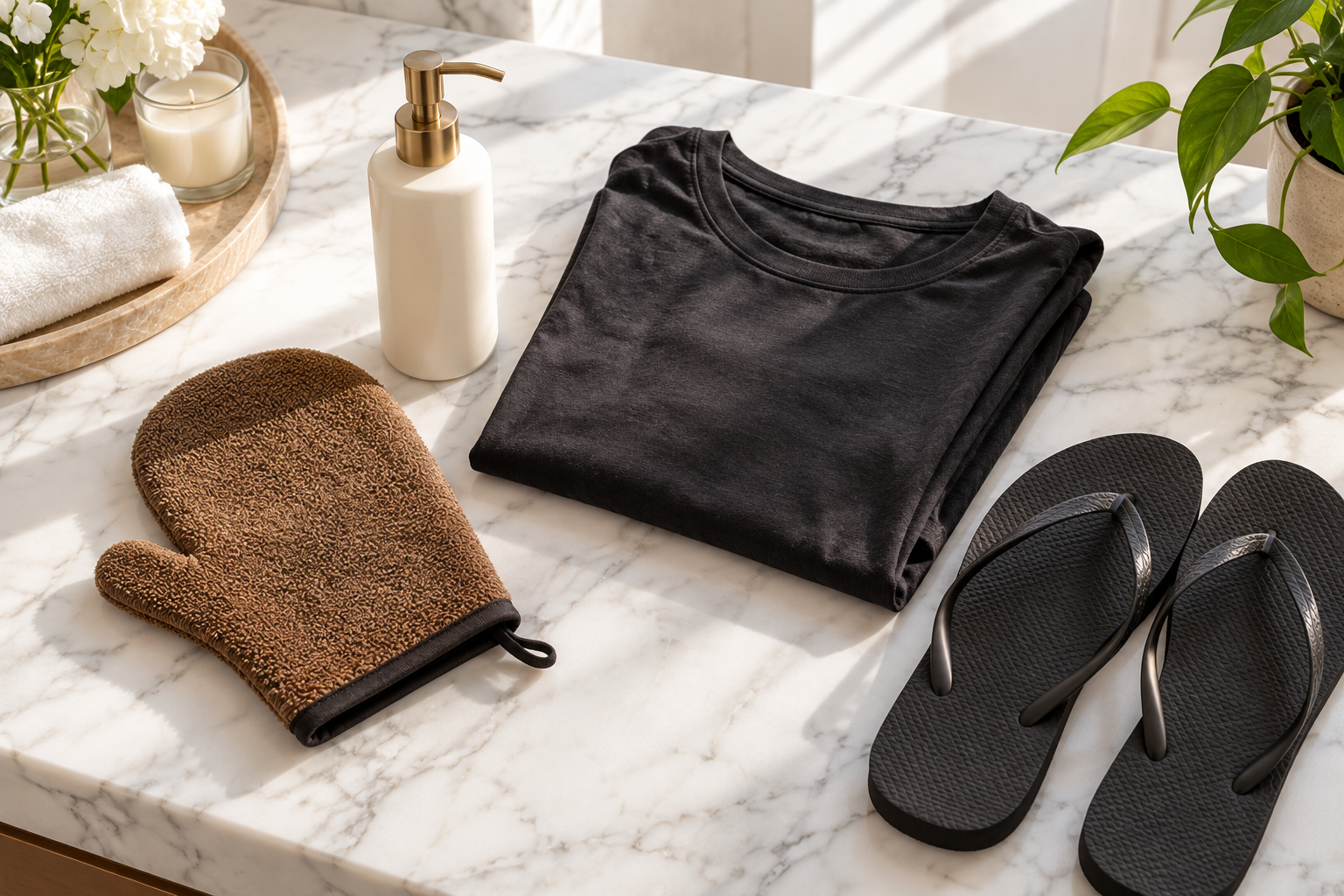
If the brand is not the variable, what is? Four things, in order of how often they ruin a tan at any salon in the city. First, preparation. Sunless color lands on the outer layer of the skin, so the outer layer is the whole project: exfoliate the night before or the morning of, with attention to elbows, knees, ankles, and hands, shave or wax at least a day ahead, and arrive with nothing on the skin, no lotion, oil, deodorant, or makeup, because every barrier produces a streak or a pale patch. Every orange, streaky, patchy spray tan complaint we have ever heard traced back to this paragraph, not to the booth.
Second, shade match. The right solution depth for your skin tone is the difference between golden and orange, and a salon that asks about your natural coloring and your goal before selecting it is doing the job; a salon with one shade for everyone is not. Third, the staff. The person who walks you through the positions, explains the timing, tells you when to shower, and volunteers the aftercare is the reason your tan lasts seven days instead of four. Fourth, cleanliness and maintenance. A booth wiped between clients, nozzles maintained, and solution fresh produces even color; a neglected booth of either brand does not.
Why We Run a Mystic Booth, Honestly
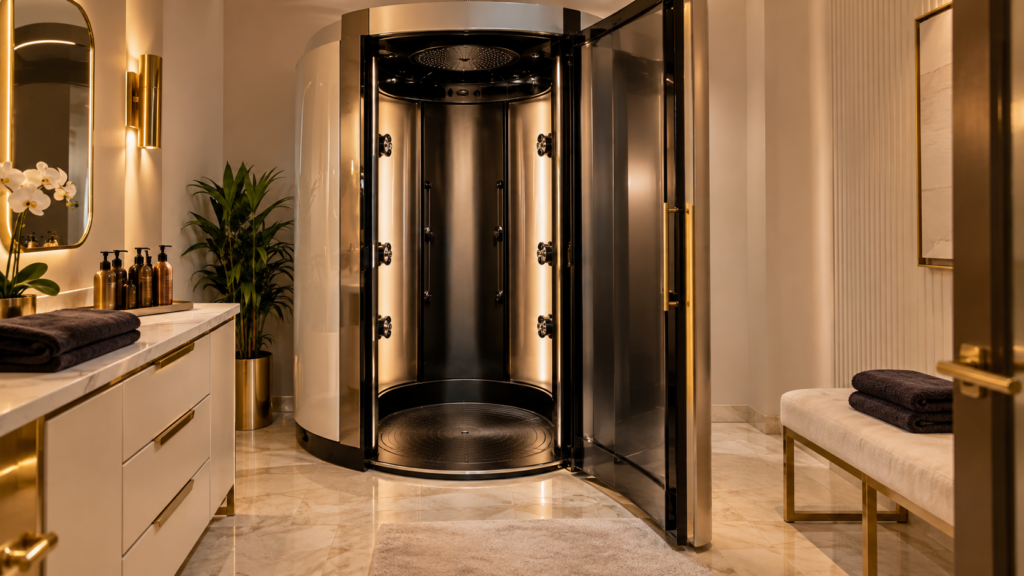
New York Sun Club runs a Mystic booth at its Upper East Side salon, and the reasons are practical rather than tribal. The booth suits the way the neighborhood uses sunless color, private, fast, consistent, and weekly, and it sits beside a custom airbrush room, which is the real strategic choice: a client who wants the booth’s speed gets the booth, and a client who wants color contoured by hand for a wedding or a photograph gets the airbrush, applied with Norvell solution by a technician who asks about the dress. Having both means the desk has no incentive to oversell either, and the one minute conversation at the front, booth for the routine, airbrush for the occasion, is the most useful thing the salon offers. The staff walk every first timer through the positions, confirm the preparation, and volunteer the aftercare, and the salon publishes its prices, booth singles and packages alongside custom airbrush from 80 dollars for an express session, on its airbrush and spray tanning page. None of that would be different if the booth carried the other name. All of it would be different if the salon skipped the conversation.
Booth or Airbrush: The Question That Matters More
Since the brand question turns out to be smaller than expected, here is the one that is larger. Both booth brands are automated: even, consistent, private, identical every visit, and ideal for weekly maintenance and first timers who want no audience. Custom airbrush is the artisan alternative: a technician applies the solution by hand, contours it to the body, adjusts depth by area, corrects for the parts of you that grab or resist solution, and matches the shade to your skin tone and the lighting of the photographs ahead, which is why airbrush reads more naturally on camera and lasts seven to ten days against the booth’s five to seven. A bride choosing between Mystic and VersaSpa is asking the wrong question; the right one is booth or airbrush, and the answer for the aisle is airbrush, booked one to two days before, with a trial two weeks out. The full comparison across all three methods, including UV, lives in the salon’s guide to airbrush vs spray tan vs UV tanning.
Aftercare, Identical for Both
Whichever booth sprayed you, the tan lives or dies on the same care. Stay dry until the first shower, no gym, no rain, no dishes, no tight clothing. Rinse the guide with warm water, no scrubbing, and pat dry. Moisturize daily from then on, because hydrated skin holds sunless color and dry skin sheds it. Avoid long hot soaks, chlorine, and heavy exfoliation for the life of the tan, and keep acetone away from the color, which means the manicure belongs after the first shower with the exfoliation step skipped. For a weekly rhythm, exfoliate lightly before each fresh session so the new color builds on clean skin rather than old color. And one fact that applies to every sunless tan from every booth and every technician: a spray tan is not sunscreen, provides no meaningful UV protection, and the beach still needs SPF regardless of how golden the color reads.
How to Choose a Spray Booth Salon
Ignore the name on the door and ask five questions. Can I see the booth before I book, and is it cleaned between clients? Which shade do you recommend for my skin tone, and how many do you stock? Will someone walk me through the positions and the shower timing? Do you also offer airbrush, so I can choose the right service for an event? And do you publish your prices? A salon that answers all five without hesitation will give you a good tan from either booth. A salon that answers the first question with the brand name instead of a yes has told you something too. On the Upper East Side, the booth, the airbrush room, and the desk that asks the questions sit on the third floor at 1459 Third Avenue, and the full picture of the salon lives on the Upper East Side tanning salon page.
Frequently Asked Questions
Is Mystic Tan or VersaSpa better?
Neither is meaningfully better. Both are automated UV free spray booths from the same manufacturer family, using DHA based solutions that develop over two to three hours, peak around six, and last five to seven days. Booth design, session flow, and solution menu vary by generation and salon; preparation, shade match, staff, and cleanliness decide the result.
Does a Mystic tan look different from a VersaSpa tan?
Not to most eyes or cameras when both are prepared for identically and matched to the same skin tone. Differences clients notice usually come from the shade chosen or the preparation, not the booth brand.
How long does a Mystic Tan last?
About five to seven days with daily moisturizer and normal care, the same as a VersaSpa booth tan. Custom airbrush lasts a few days longer, around seven to ten.
Which spray booth is better for a wedding?
The better question is booth or airbrush. For a wedding or a photographed event, custom airbrush applied by hand and contoured to the dress reads more naturally and lasts longer; either booth suits the bridal party’s maintenance and the groomsmen.
Can you get orange from a Mystic or VersaSpa booth?
Only when the skin was not prepared or the shade was too deep for the skin tone. Modern DHA formulas in both booths produce golden brown color on exfoliated, product free skin matched to the right shade.
Where can I get a Mystic Tan on the Upper East Side?
New York Sun Club at 1459 Third Avenue, third floor, runs a Mystic UV free booth beside a custom airbrush room, with published prices, staff who walk you through the session, and hours seven days a week including Sunday until 8.
The Bottom Line
Mystic Tan vs VersaSpa is a real question with a small answer: two booth lines from one manufacturer family, same chemistry, same timeline, same care, with differences in design and session flow that vary by generation and matter less than the salon running them. Prepare the skin the night before, ask for the shade that matches you, insist on a staff walkthrough, and choose a salon that also offers airbrush so the event gets the hand it deserves. Do that, and either name on the door will send you out golden. Skip it, and neither will.
