- blog
-
by admin
The Question Every First-Timer Asks at the Front Desk
Type “tanning beds near me” into your phone on the Upper East Side and you get a map, a list of salons and no answer to the question you actually have: which bed. Most salons run two formats, the stand-up booth and the lay-down bed, and they produce different results, feel completely different during the session and suit different people. New York Sun Club runs both at 1459 3rd Ave on the Upper East Side, and the staff answer this question at the front desk several times a day. This guide is that conversation written down, so you can walk in knowing what to book.
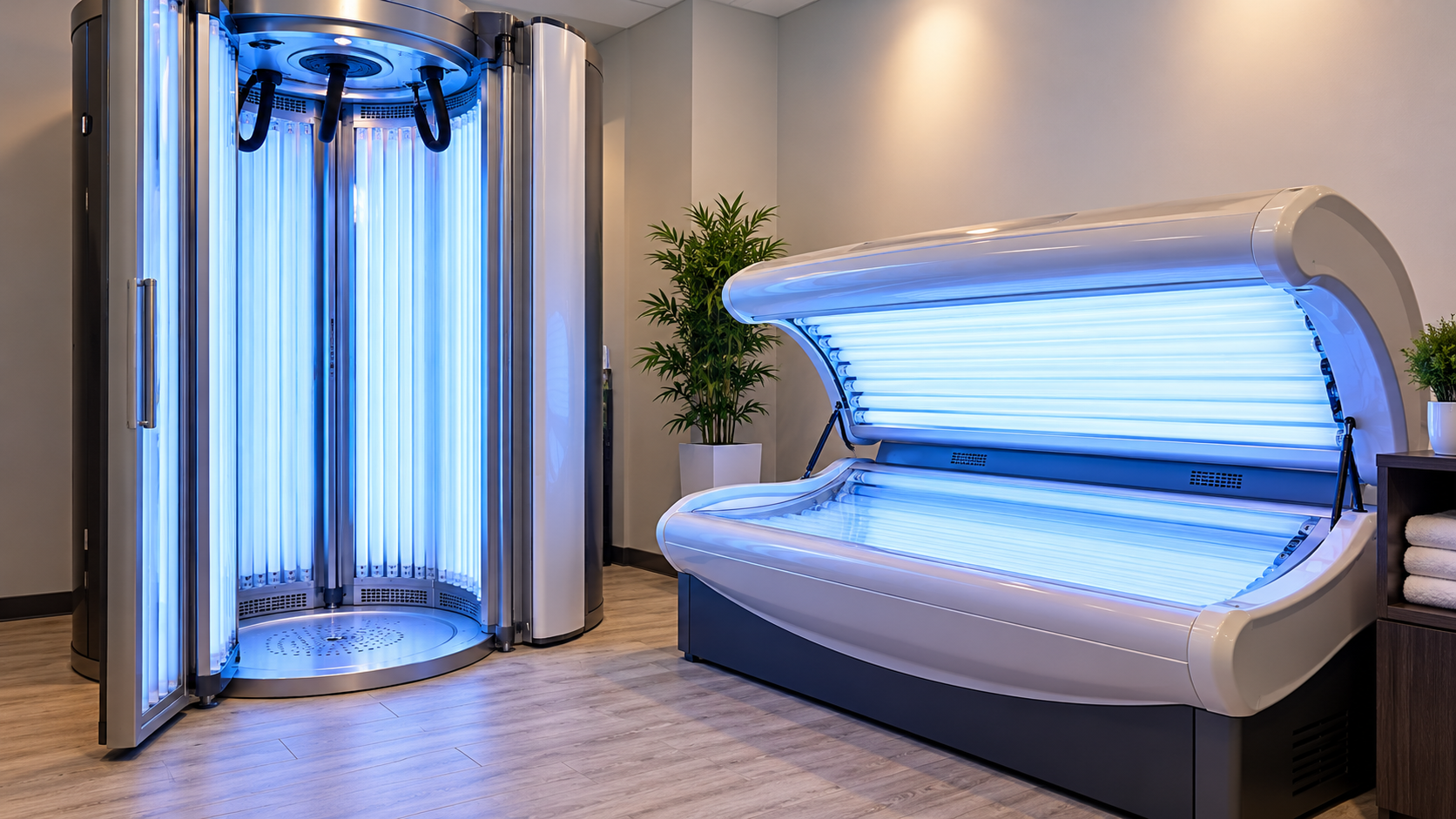
A stand-up tanning booth surrounds you with vertical lamps while you stand, so there are no pressure points, no contact with a surface, a faster and more even session, and full coverage under the arms and along the sides. A lay-down tanning bed lets you rest horizontally between two lamp panels, which suits people who want a relaxed session and a traditional format, but can leave lighter patches where the body presses the acrylic. For most first-timers and anyone who wants even color fast, book the stand-up. For anyone who wants to lie still for the session or has trouble standing comfortably, book the lay-down. New York Sun Club offers both at 1459 3rd Ave, Fl 3, New York, NY 10028. Call (212) 776-1000.
How a Stand-Up Booth Works
A stand-up booth is a vertical cylinder or cabinet lined with UV lamps. You step in, close the door, hold the overhead handles or grips and stand for the session while the lamps surround you on every side. Because nothing touches your skin, every surface of the body receives the same exposure, including the sides of the torso, the backs of the arms and the areas a lay-down bed misses where you press against the acrylic.
Session Time in a Stand-Up
Stand-ups typically run higher-output lamps and shorter sessions than lay-downs. A first-time session is a few minutes; experienced tanners work up to the booth’s posted maximum, which in New York must be displayed beside each machine and cannot be exceeded. For a working professional stopping in after the 6 train, the stand-up is the fastest way to a session and out the door.
Who the Stand-Up Suits
People who want the most even color. People with limited time. Anyone who finds lying in an enclosed bed uncomfortable or claustrophobic. Athletes and anyone with a tattoo-free back who wants coverage without pressure lines. And first-timers, because the shorter session and even exposure make it harder to overdo.
What People Dislike About Stand-Ups
Standing for the full session with arms raised is tiring for some people, especially on the longer settings. There is a small learning curve to holding position so the arms and legs do not shadow each other. And some clients simply prefer to lie down and rest; for them the booth feels like a chore.
How a Lay-Down Bed Works
A lay-down bed is the classic clamshell: a cushioned acrylic surface over a lower lamp panel, with an upper canopy of lamps that closes over you. You lie on your back for the session, usually with the option to turn, and the lamps above and below do the work.
Session Time in a Lay-Down
Lay-down sessions tend to run longer than stand-ups because the lamp configuration and output differ, and because the session is meant to be restful. The posted maximum for each bed applies here too. Many regulars use a lay-down as their maintenance session, two or three times a week, on a monthly pass.
Who the Lay-Down Suits
People who want to relax for the session. Anyone who cannot stand comfortably for several minutes, including clients with back, knee or balance issues. Clients who have used lay-downs for years and know exactly how their skin responds to them. And anyone who treats the session as downtime rather than an errand.
What People Dislike About Lay-Downs
Pressure points. Where the shoulder blades, buttocks, calves and the backs of the arms press into the acrylic, blood flow is reduced and the skin tans lighter, which is why lay-down tanners sometimes show faint pale patches on the back. Turning partway through helps. The sides of the body and under the arms get less exposure. And the enclosed canopy is not for everyone.
Stand-Up vs Lay-Down: The Direct Comparison
Evenness of Color
Stand-up wins. No contact means no pressure points and full coverage of the sides and underarms. Lay-down tanners can get close by turning and by alternating with a stand-up session.
Session Length
Stand-up is shorter. If time is the constraint, the booth is the answer.
Comfort
Lay-down wins for most people who want to rest. Stand-up wins for anyone who dislikes enclosed spaces or lying on a surface others have used, even though beds are sanitized between every client.
Hygiene
Stand-up has the edge because skin does not contact the booth surfaces. Lay-downs are cleaned and sanitized after each session at any properly run salon, and the acrylic is wiped before you enter, but the stand-up’s no-contact design is reassuring for people who care about this.
Learning Curve
Lay-down is easier for the first minute; you lie down and the bed does the rest. Stand-up takes one session to learn how to hold the grips and position the arms and legs so nothing shadows.
Best for First-Timers
Stand-up, for the shorter session and even exposure. The staff will set a conservative time for the first visit regardless of which format you choose.
Which Should You Book First
If you have never tanned indoors, book a stand-up for your first session, keep it short and see how your skin responds over the next 24 to 48 hours before booking the second. If you have a specific reason to prefer lying down, book the lay-down and tell the staff it is your first time so they set the time accordingly. After two or three sessions, most clients settle on one format and stick with it, and plenty alternate: stand-up for the even base, lay-down for the restful maintenance session.
The UV tanning beds on the Upper East Side page describes the specific stand-ups and lay-downs at the 3rd Avenue salon, and the staff will walk a first-timer through the choice at the desk.
Skin Type Decides the Session Time, Not the Bed
Whichever format you choose, the session length is set by your skin type, not by the machine. New York requires tanning operators to classify each customer’s skin type using a standard system, to give every customer a health risk fact sheet and to post the maximum time for each machine beside it, according to the NYC Health Department’s indoor tanning page. At New York Sun Club that happens at the first visit: a short form, a skin type assessment and a recommended starting time that is deliberately shorter than most people expect.
Fair skin that burns easily starts at the lowest setting and builds slowly over a week or more. Medium skin that tans with some initial redness starts low and builds faster. Olive and darker skin can start higher and reach a maintenance level quickly. The common mistake is a first-timer insisting on the maximum because a friend uses it. The friend has built up to it; you have not.
Protective Eyewear Is Not Optional
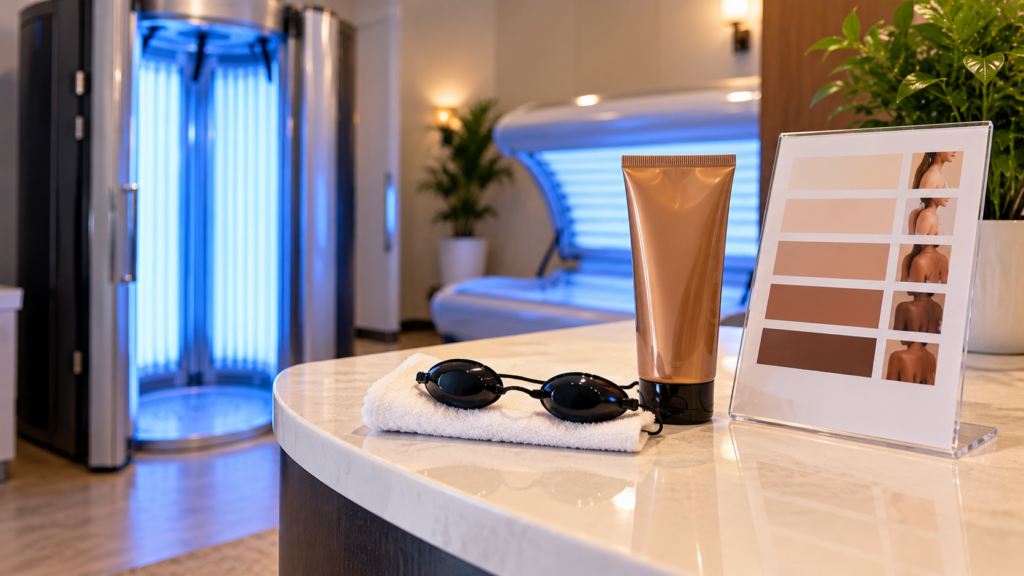
Under New York law, customers must use protective eyewear in a UV bed or booth, and the salon must provide it at no charge if you do not have your own. Closing your eyes is not enough; eyelids do not block UV. New York Sun Club keeps eyewear at the front desk, and the staff will not start a session without it. This applies equally to stand-ups and lay-downs.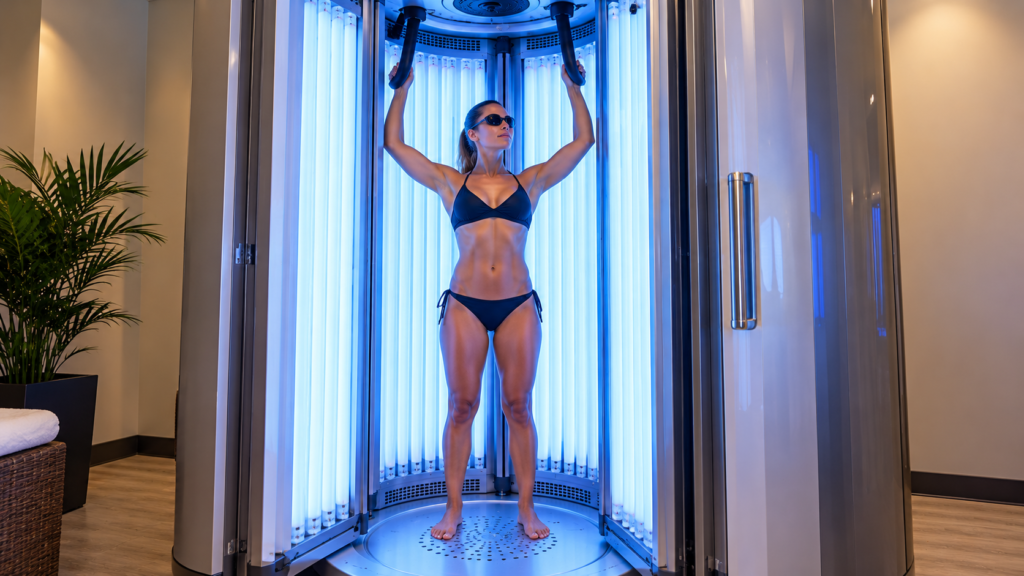
Who Should Not Use a Tanning Bed at All
Some people should choose a UV-free option regardless of which bed they were considering. Anyone with a personal or family history of skin cancer. Anyone taking a photosensitizing medication, which includes certain antibiotics, acne treatments, diuretics and others; ask your pharmacist. Anyone under 18, who cannot use UV tanning equipment in New York. Anyone who burns rather than tans. For all of these, the salon’s Mystic spray booth or a custom airbrush session gives color with no UV exposure, and the airbrush vs spray tan vs UV tanning guide explains the differences. The sunless booth page covers the Mystic option and the airbrush tanning in NYC page covers the hand-applied one.
How to Get the Most From Either Bed
A few habits make a real difference to the result and are the same for stand-ups and lay-downs.
Exfoliate the day before, not the day of. Dead skin tans unevenly and flakes off, taking color with it. Shower before the session and arrive with clean, dry skin, no lotion, perfume or deodorant, since many products contain ingredients that block or react to UV. Use an indoor tanning lotion designed for beds if the salon offers one; it keeps the skin hydrated under the lamps. Moisturize afterward and every day between sessions, because hydrated skin holds color longer. Space sessions at least 24 hours apart, and in practice every other day is the standard rhythm for building a base. And remove jewelry and anything that will leave a pale line.
For lay-downs specifically, shift position partway through the session to reduce pressure marks. For stand-ups, keep the arms slightly away from the body on the grips so the sides of the torso are exposed.
Three Mistakes People Make With Tanning Beds Near Me Searches
The first mistake is booking by price alone. A cheaper single session at a salon that runs only old lay-downs is not a bargain if the result is patchy and the session is twice as long. Compare the equipment, not just the rate card.
The second is skipping the first-visit conversation. Clients who search “tanning beds near me,” walk in and ask for the maximum time on whatever bed is free are the ones who burn, and a burn sets the base tan back a week. Five minutes at the desk on skin type and format saves that.
The third is treating stand-up and lay-down as interchangeable. They are not. A client who builds a base in a stand-up and then switches to a lay-down at the same time setting will usually find the lay-down session needs adjusting, and vice versa. Tell the staff when you switch formats, and if anything feels off during or after a session, call (212) 776-1000 before the next one rather than guessing.
Finding Tanning Beds Near You on the Upper East Side
Searching “tanning beds near me” from Yorkville, Lenox Hill or Carnegie Hill brings up a short list, and the salons differ more than the map suggests. Some run only lay-downs. Some are spray-only. New York Sun Club at 1459 3rd Ave, between 82nd and 83rd Streets, runs both stand-ups and lay-downs plus a Mystic booth and custom airbrush, so a client can choose the format and switch between them on the same pass. It is two blocks from the 86th Street 4, 5, 6 and Q stations and open Monday to Friday 10 am to 9 pm, Saturday 10 am to 6 pm and Sunday 10 am to 8 pm, hours that cover the after-work session most Upper East Side clients want. The tanning salon on the Upper East Side page covers the location in full, and the tanning in Yorkville and Lenox Hill page has block-by-block directions.
Pricing for single sessions, monthly unlimited passes and VIP packages is published on the tanning in NYC page, with specials on the promotions page. West Siders can use the sister salon at 2465 Broadway, described on the Upper West Side tanning salon page.
Book a Bed at New York Sun Club
Walk in or call (212) 776-1000. Tell the front desk whether you want a stand-up or a lay-down, or say it is your first time and let them recommend one. Bring nothing but clean skin; eyewear is provided. New York Sun Club – Tanning & Airbrush is at 1459 3rd Ave, Fl 3, New York, NY 10028, with directions and reviews on the salon’s Google Business Profile and current specials at nysunclub.com.
Frequently Asked Questions
Is a stand-up tanning bed better than a lay-down?
For evenness and speed, yes. A stand-up booth surrounds you with lamps while you stand, so there are no pressure points and the sides and underarms get full exposure, in a shorter session. A lay-down bed is better for anyone who wants to rest during the session or cannot stand comfortably. Many clients alternate between the two.
Do stand-up tanning beds work faster?
Stand-up booths generally use higher-output lamps and shorter session times than lay-down beds, so a session is quicker and color builds efficiently. The posted maximum time beside each machine still applies, and a first session should be well below it regardless of format.
Why do I get pale patches on my back from a lay-down tanning bed?
Pressure. Where the shoulder blades, buttocks and calves press into the acrylic, blood flow is reduced and the skin tans lighter. Shifting position partway through the session, or alternating lay-down sessions with a stand-up, evens the result.
How long should a first tanning bed session be?
Shorter than most people expect, set by your skin type rather than the bed. New York requires salons to classify your skin type and post the maximum time for each machine. At New York Sun Club the staff recommend a conservative starting time at the first visit and build from there over several sessions.
Do I need eyewear in a stand-up tanning booth?
Yes. New York law requires protective eyewear in any UV tanning bed or booth, and the salon must provide it free if you do not have your own. Closed eyelids do not block UV. New York Sun Club keeps eyewear at the front desk.
Where can I find stand-up tanning beds on the Upper East Side?
New York Sun Club at 1459 3rd Ave, Fl 3, New York, NY 10028, between 82nd and 83rd Streets, runs both stand-up booths and lay-down beds, plus a Mystic spray booth and custom airbrush. It is two blocks from the 86th Street stations and open seven days, until 9 pm on weeknights.
Can I switch between stand-up and lay-down on the same pass?
At New York Sun Club, yes. Monthly and VIP passes cover the UV beds, and clients commonly alternate a stand-up session for an even base with a lay-down session for a restful maintenance visit. Ask at the front desk about the current pass options.
